Mission
Artemis III overview
NASA’s planned 2027 crewed demonstration in low Earth orbit: SLS launches Orion with four astronauts from Kennedy Space Center to practice rendezvous and docking with commercial human landing system pathfinders — preparing for Artemis IV’s planned first crewed lunar South Pole landing.
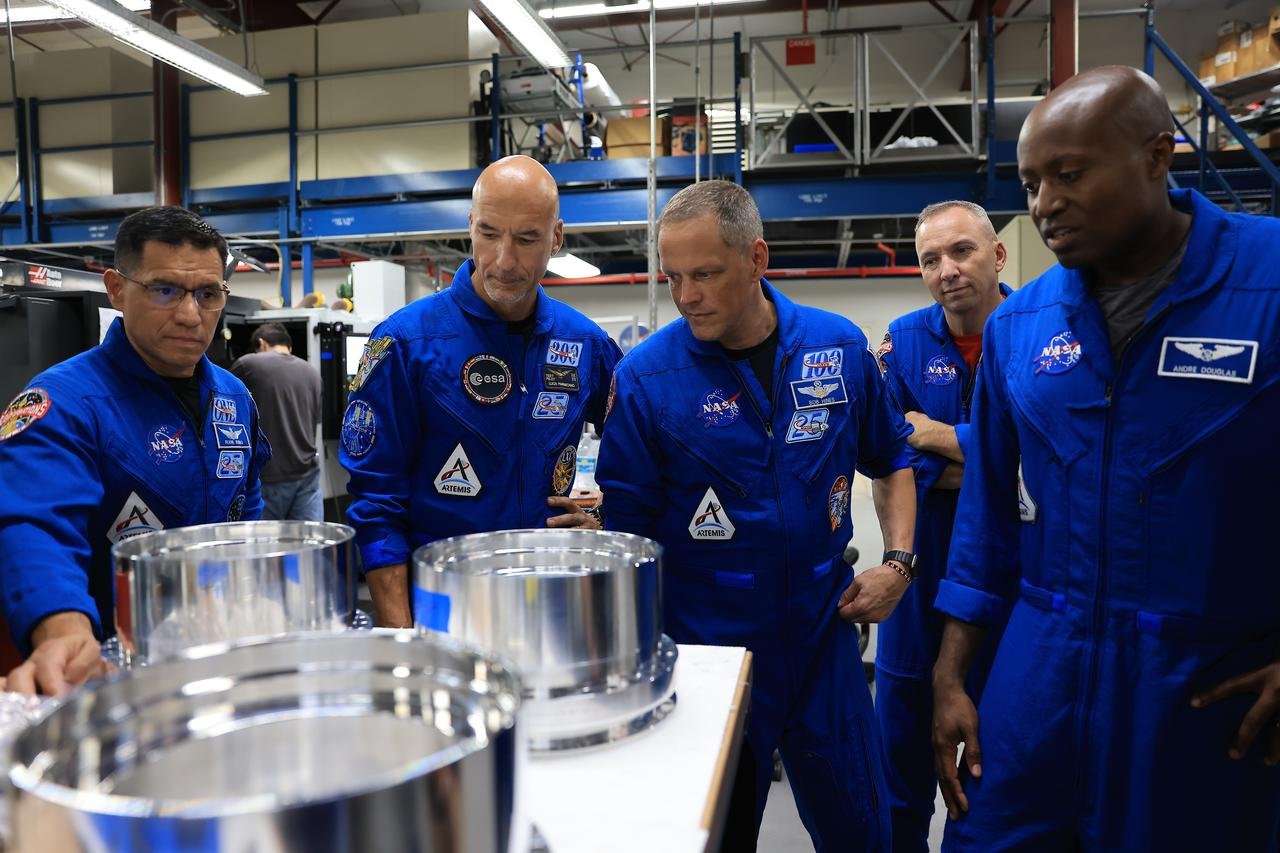 NASA / Kim Shiflett
Mission framing (NASA, 2026)
- TypeCrewed LEO systems / rendezvous & docking demonstration
- Target year2027 (NASA); summer 2027 target described at NASA’s Oct. 23, 2026 briefing
- DurationPlanned 14 days (NASA, Oct. 2026)
- LaunchPad 39B, Kennedy Space Center · SLS + Orion
- OrbitLow Earth orbit — ESA European Service Module circularizes after SLS inserts Orion (NASA May 2026)
- Lander testsBlue Origin Blue Moon Mark 2 test article, then SpaceX Starship Version 3 test article (NASA, Oct. 2026)
- ReturnPacific Ocean splashdown off California, with NASA and U.S. Navy recovery; upgraded Orion heat shield test planned (NASA)
- Next stepArtemis IV — first Artemis mission planned for the lunar surface (2028); NASA will select the first lander based on readiness
Notional sequence
Key phases (as NASA describes)
-
Pathfinder first
Blue Origin lander pathfinder to LEO
Blue Origin launches its Blue Moon Mark 2 test article first, into a circular orbit about 273 miles (237 nautical miles) up. It can wait in orbit for up to 30 days before the crew arrives.
-
Crew launch
SLS loft Orion from Pad 39B
Four crew members launch aboard Orion. For Artemis III, NASA plans a non-propulsive spacer in place of the interim cryogenic propulsion stage used on earlier flights; the European Service Module circularizes the orbit.
-
Docking 1
Orion ↔ Blue Moon pathfinder
Rendezvous, proximity operations, and docking tests — NASA has described about two days docked, including crew entering the Blue Moon test article (up to two crew in Orion survival suits, per NASA’s July 2026 HLS overview).
-
Docking 2
Orion ↔ Starship pathfinder
SpaceX launches its Starship Version 3 test article later in the mission, into a lower orbit. After undocking from Blue Moon, Orion docks at Starship’s nose for a test expected to last up to two hours. NASA states astronauts will not enter Starship.
-
Return
Re-entry & splashdown
Up to five more days in orbit are available for Orion tests and science. Orion then returns through Earth’s atmosphere (upgraded heat shield testing planned) and splashes down in the Pacific off California, with NASA and U.S. Navy recovery, as on Artemis II.
Sequence as described in NASA’s Oct. 23, 2026 mission overview. Plans may change as NASA updates them.
Objectives
What success looks like
Primary goal: buy down risk before a crewed lunar landing by proving multi-launch coordination and Orion–lander integrated operations in Earth orbit.
- Demonstrate Orion rendezvous, proximity operations, and docking with HLS pathfinder(s)
- Exercise multi-launch campaign logistics across NASA and commercial partners
- Further evaluate Orion life support with a longer crew stay than Artemis II
- Test docking sensors and evaluate Orion Crew Survival System suits
- Inform Artemis IV surface mission operations
Sources: NASA Artemis III, Oct. 23, 2026 mission plan, June 9, 2026 crew & mission update, May 2026 preliminary plans.
Keep reading
SLS, Orion & landers · Crew bios · NASA photography
Architecture updates in 2026 changed earlier “Artemis III lands on the Moon” descriptions. This hub follows NASA’s current public framing.